
Commercial Space Stations
Private companies are expanding who goes to space and why. The next generation of stations has to work for new purposes and for people who haven’t spent years training.
Team: Led a multidisciplinary design team across parallel workstreams, with specialists contributing across the program.
Partners: Teague design, engineering and program teams, plus client design, engineering and leadership teams.
A feasible direction for the human experience, held across interdependent systems and teams.
To serve more diverse crews and missions, spaceflight environments need to feel intuitive and ease adaptation to microgravity, a significant shift from legacy stations built around career astronauts. But commercial programs are scaling fast on ambitious schedules, so design decisions often have to be made before the full picture is known.
Program A – Vision
Design intent for key station areas, with decision frameworks and a review cadence.
Program B – Evaluation
Human-in-the-loop evaluation of early configurations ahead of a NASA review.
Much of this work is confidential. You can find some of my thinking on Teague’s website, and I’m happy to talk through my approach in conversation.
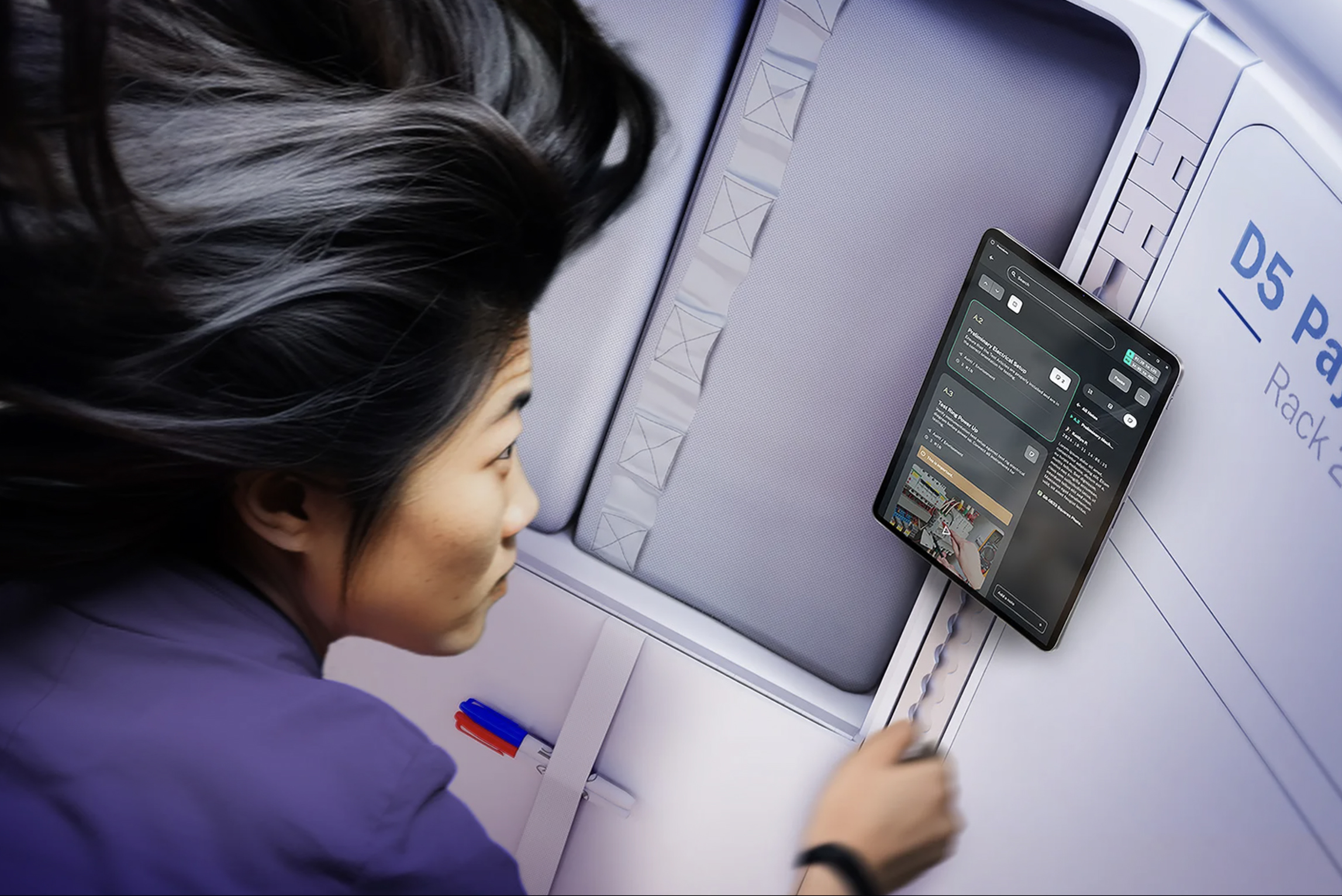
Creative direction, design operations and team leadership for next-generation crew environments across two commercial space station programs.
Early in a station program, layout and systems are still taking shape, and each change raises new tradeoffs across teams and organizations. The human experience needed a direction strong enough to hold its own against technical and safety demands, and durable enough to survive as the program evolved.
Building on our team’s crew research, I led the design framework and positioning, set the vision and principles with project leads, and shaped and presented the story to client leadership and at NASA reviews.
Then I built the structure that let teams carry that direction without me in every decision: the frameworks, plans and team model below. I staffed each phase to people’s strengths, and gave leads feedback and support as they refined their work and presented it to client leadership.
Design framework. Vision, experience drivers, principles and design language, giving every team the same basis for decisions.
Decision frameworks. Made tradeoffs visible and kept habitability on par with technical metrics.
Phase, fidelity and review plan. Tied design phases and fidelity levels to engineering review milestones, with a cross-organization review cadence that kept interdependent teams in sync.
Team and engagement model. Defined roles and responsibilities across design workstreams, client decision makers and engineering owners, so everyone knew who owned what.
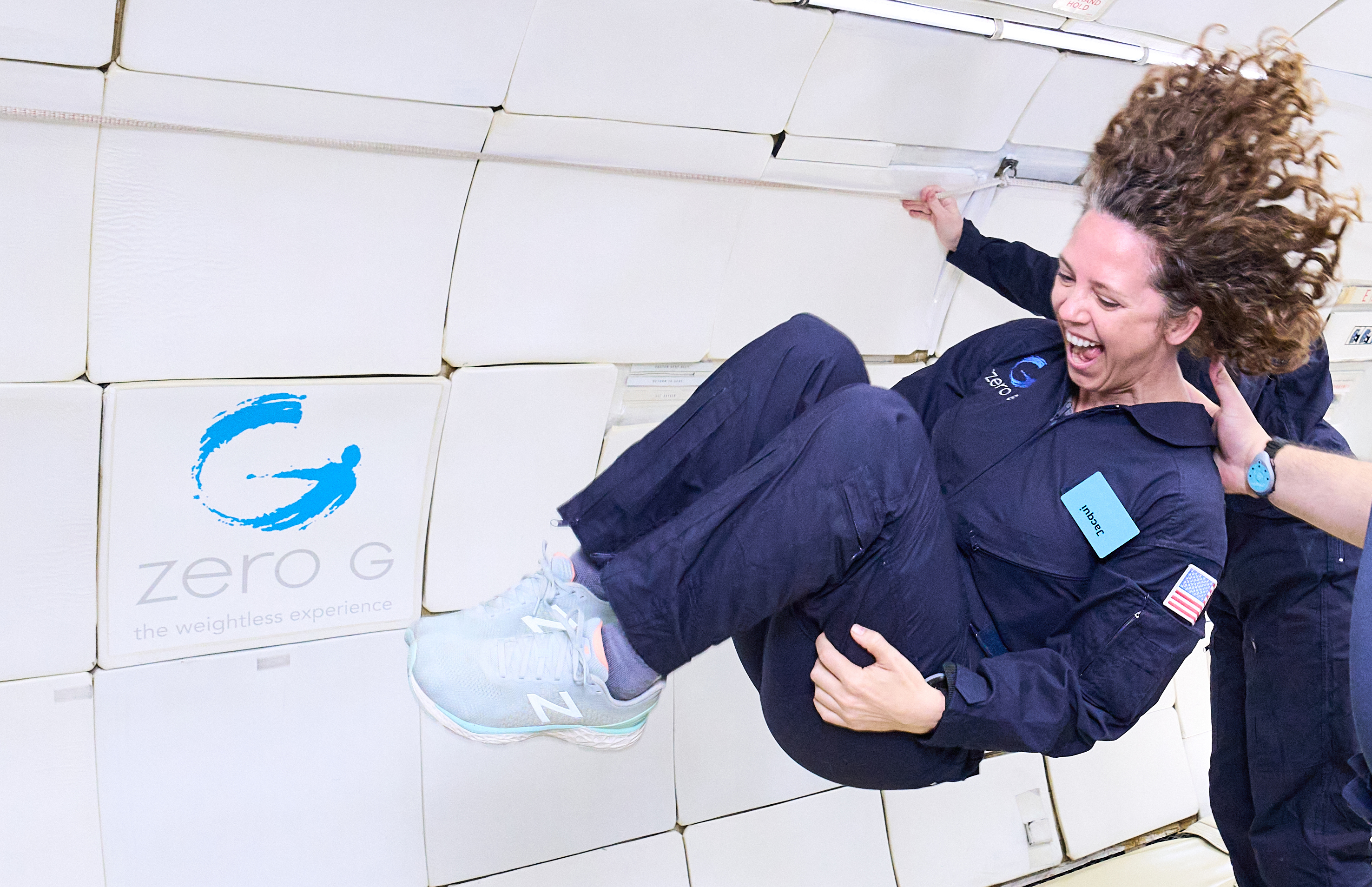
Breaking our 1g biases to design intuitive, human-centered microgravity experiences.
Keeping the human experience at the center of so many moving parts was challenging, but it was energizing to work with people deeply committed to wrestling with tough constraints.
Flying in microgravity myself was an awe-inspiring privilege, and it changed how I think about designing for space: to deliver intuitive, human-centered solutions, we have to break our Earthly biases and design for the unique and native properties of microgravity.